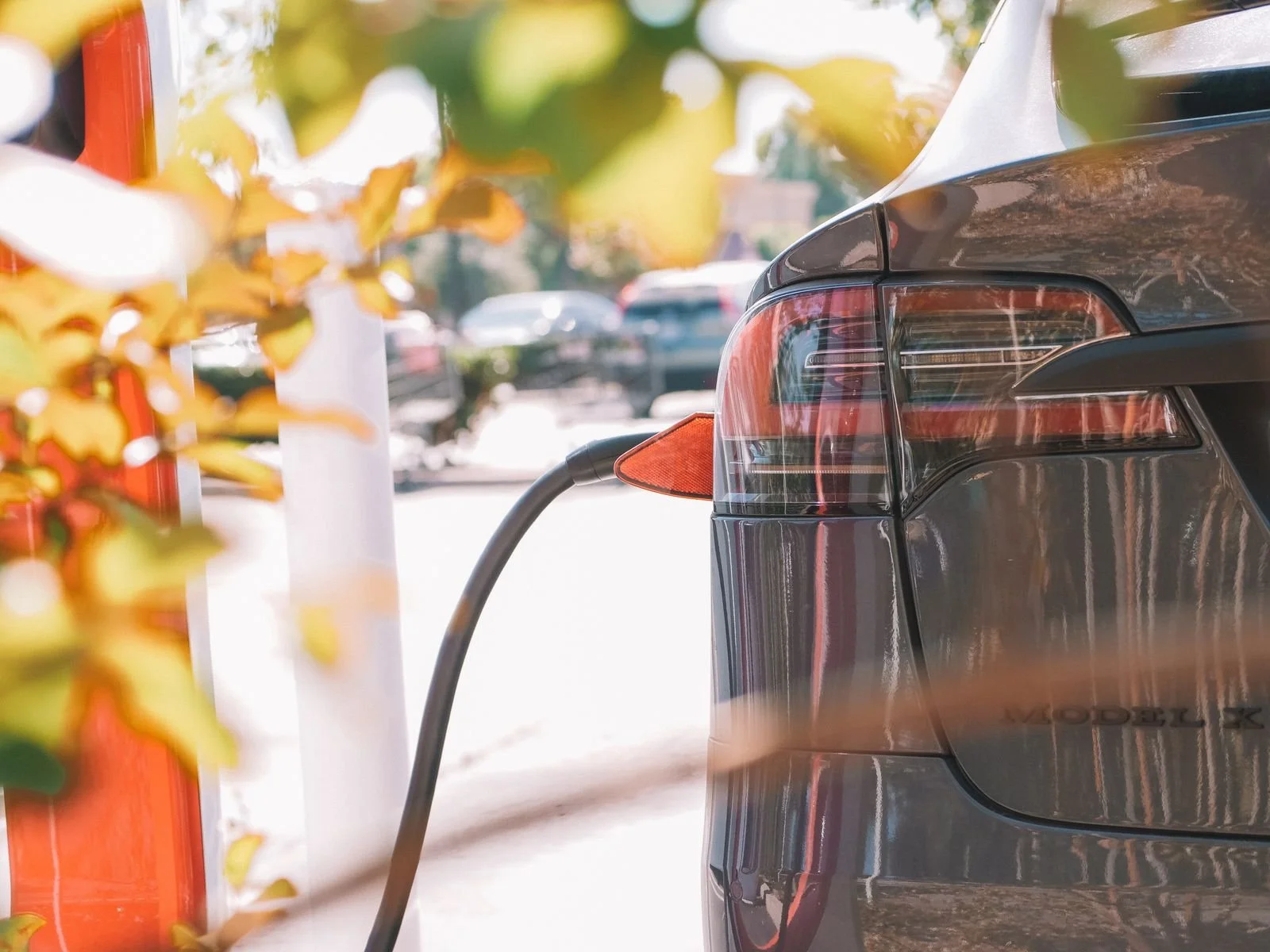
Photo by Kindel Media on Pexels. Illustrative photo.
Before buying a used EV, ask for a recent battery-health assessment tied to the car's VIN, verify the remaining battery warranty, and arrange an inspection by someone qualified to work on that model. The miles showing on the dashboard are useful for planning a drive, but they aren't enough to establish the battery's condition.
I would be interested in a well-priced used EV. I would also want the battery conversation settled before the finance paperwork comes out. “It charges to 100 percent” and “the battery is still under warranty” leave several important questions unanswered.
The goal isn't to find a used battery with no aging. It's to understand what you're buying, whether it suits your driving, and what evidence supports the seller's claims.
A full charge doesn't mean full original capacity
State of charge tells you how full the battery is relative to its current available capacity. Battery health concerns how it is holding up, including how much energy it can retain compared with an appropriate reference. A battery can reach a displayed 100 percent charge after it has lost some of its original capacity.
Estimated range is another number again. It reflects assumptions about how far the available energy will take the car. The calculation varies by vehicle, and actual range changes with conditions.
For example, Tesla explains that its displayed miles use EPA-rated efficiency rather than your personal driving pattern. Real-world range is affected by speed, weather, terrain, and other energy demands. I wouldn't divide a dashboard number by an old window-sticker range and present the result as a verified battery-health percentage.
Ask the seller what supports “the battery is good.” If the answer is a photo of the dashboard after charging, you still need a better answer.
Ask for the report behind the percentage
A useful report should make it possible to tell which car was checked, when it was checked, and what the result actually means. I'd ask for:
The VIN, test date, and odometer reading.
Who performed the assessment and which tool or manufacturer procedure they used.
Whether the result is a measured capacity assessment, a battery-management-system estimate, or another kind of evaluation.
Any fault codes, warnings, limitations, or recommended follow-up.
The technician's explanation of what the result says about this particular battery.
If a report says 88 percent, ask “88 percent of what?” Is it estimated energy retention compared with new, an overall score created by the provider, or something else? Those descriptions matter when you're comparing two cars with reports from different systems.
A test from last year may provide history, but I would want to know what has happened since. A recent repair or battery replacement is a reason to ask for the corresponding invoice and current assessment, not a reason to stop checking.
If the seller can't provide a meaningful report, ask an EV-qualified shop what it can assess before purchase. Sometimes the honest answer will be that a particular measure isn't available. Treat that as uncertainty to weigh, rather than letting a salesperson fill the gap with an unsupported number.
There isn't one test that works for every used EV
Testing depends on the manufacturer, model, equipment, and available tools. Some cars provide information through their own software. Others need a shop's diagnostic equipment or a specialist assessment.
Tesla's Model 3 battery-health instructions illustrate why you should check the exact vehicle. The manual says the feature may not be equipped, and an optional test can require an AC charging connection for up to 24 hours. Tesla recommends that test when there is a concern about energy retention.
That's something to arrange with the seller and a qualified technician if appropriate, not a universal parking-lot procedure. Follow the manufacturer's instructions. Don't improvise by repeatedly running a car empty or opening high-voltage components.
I also wouldn't set one universal percentage that makes every used EV a buy or a pass. The test method, age, model, price, remaining coverage, and your needs all matter. A result can be acceptable under a warranty and still leave you with too little practical range for the way you drive.
Read the battery warranty before relying on it
Get the warranty that applies to the particular car, not just the warranty advertised for a new version of the same model. Ask for the original start date, expiration date and mileage, transfer requirements, and any relevant restrictions.
Then separate coverage for a defect from coverage for capacity loss. If the warranty includes a capacity threshold, read how it is defined and assessed. Don't assume every battery warranty uses the same threshold or that ordinary degradation automatically qualifies for a repair.
For example, Tesla's warranty page lists different battery mileage limits for different versions and includes a minimum 70 percent capacity-retention provision for the listed new-vehicle coverage. It also directs owners to the warranty provided with their vehicle for authoritative terms. That threshold is a warranty provision, not my recommended buying standard for every used EV.
Ask what happens if a claim qualifies. Don't assume a covered issue means you automatically receive a brand-new battery or a fresh full warranty period.
If the car is advertised as certified, check the battery coverage separately. My guide to certified pre-owned warranty coverage explains why the program name alone doesn't answer what's covered.
Inspect the car and try the charging you expect to use
Battery-health information belongs alongside a proper vehicle inspection. Tell the shop you're considering an EV purchase and confirm that it has experience and suitable equipment for that model.
I'd want the inspection to address visible battery-enclosure or underbody damage, warning messages, charging equipment, the thermal-management system, and the ordinary vehicle items that still cost money. Tires, suspension, brakes, cabin equipment, and the low-voltage battery don't become irrelevant because the car is electric. Have the professional decide what checks are safe and appropriate.
Use my used-car inspection checklist for the broader purchase process, then add those EV-specific questions.
Arrange a charging demonstration too. Confirm the car can use the home or public charging options you plan to rely on, including any approved adapter, software, or account requirements. Check which cable and accessories are actually included in the sale.
One successful charging session doesn't prove battery health. One slow session doesn't establish a failing battery either. Charging speed depends on the vehicle, charger, charge level, and conditions. If something seems wrong, have it evaluated rather than guessing from a single number on the screen.
Decide whether the remaining range works for your life
Start with your real driving: the daily round trip, whether you can charge at home or work, highway trips, and the conditions you'll face in winter. Leave room for detours and changes in weather instead of planning around the best number you've seen advertised.
The Department of Energy's winter guidance discusses cold-weather range and preconditioning. That is especially relevant if you're shopping in mild weather but will rely on the car through a cold winter.
For a short commute with dependable overnight charging, one car may fit comfortably. For regular long highway days with limited charging choices, the same car may create more compromises than the lower price is worth. A battery report helps you evaluate that choice; it doesn't make the choice for you.
Before signing, I would have the battery assessment, the applicable warranty, the inspection findings, and a workable charging plan. If an important answer is still missing, I'd pause the deal. You can also sign up for my Before You Sign checklist to review the rest of the purchase without letting the battery discussion crowd out the price and paperwork.